Inroduction
Most people don’t struggle with time because they lack discipline. They struggle because their workdays are fragmented—meetings interrupt focus, priorities shift mid-day, and everything feels urgent at once.
Research by Asana’s Anatomy of Work study found that 60% of an employee’s workday is spent on “work about work”—activities like status updates, coordination, and switching between tools—rather than on the skilled work they were hired to do. This fragmentation is one of the biggest reasons time feels scarce even when people are working full days.
Time management isn’t about squeezing more work into your schedule. It’s about creating structure around attention, priorities, and energy—so effort turns into meaningful progress.
In my 10+ years working with delivery teams, managers, and cross-functional roles, I’ve seen the same pattern repeat productivity issues almost never come from laziness. They come from unclear priorities, constant context switching, and the absence of a simple system people can trust.
This guide breaks down the most effective time management methods, explains how to choose the right one for your situation, and shows how tools and techniques support results—without turning your day into a rigid checklist.
What Are Time Management Methods (and Why They Matter)
Time management methods are repeatable systems that help you decide:
- What deserves your time
- When to work on it
- What to delay, delegate, or drop
They go beyond to-do lists. A list only tells you what exists. A method tells you what matters now.
It’s important to distinguish between three commonly mixed concepts:
- Time management methods – the overall system (e.g., GTD, Time Blocking)
- Techniques – specific tactics inside a method (e.g., Pomodoro, batching)
- Tools – software or templates that support execution (calendars, task boards)
Without a method, tools become clutter. Without techniques, methods stay theoretical. And without review, none of it sticks.
How to Choose the Right Time Management Method
There is no “best” time management method—only the best fit for your current challenge.
Before choosing, identify what’s actually breaking your day:
- Are you unclear on priorities?
- Do you procrastinate on important work?
- Do interruptions kill your focus?
- Are you managing too many tasks or projects at once?
According to research, it takes an average of 23+ minutes to fully regain focus after an interruption. When interruptions repeat throughout the day, even short tasks end up consuming far more time than planned—making focused execution nearly impossible without a deliberate system.
Here’s how common problems map to methods:
- Too many priorities: Eisenhower Matrix, ABCDE method
- Procrastination: Eat That Frog, 2-Minute Rule
- Distractions & interruptions: Pomodoro, Time Blocking
- Overcommitment: Timeboxing, Work-in-Progress limits
- Mental overload: Getting Things Done (GTD)
- Multiple projects: Kanban + Weekly Review
Across years of working with different teams, one insight stands out: people don’t fail at time management because they choose the wrong method—they fail because they try to run multiple systems simultaneously. Start with one. Let it stabilize. Improve from there.
The 12 Most Effective Time Management Methods
1. Eisenhower Matrix (Urgent vs Important)
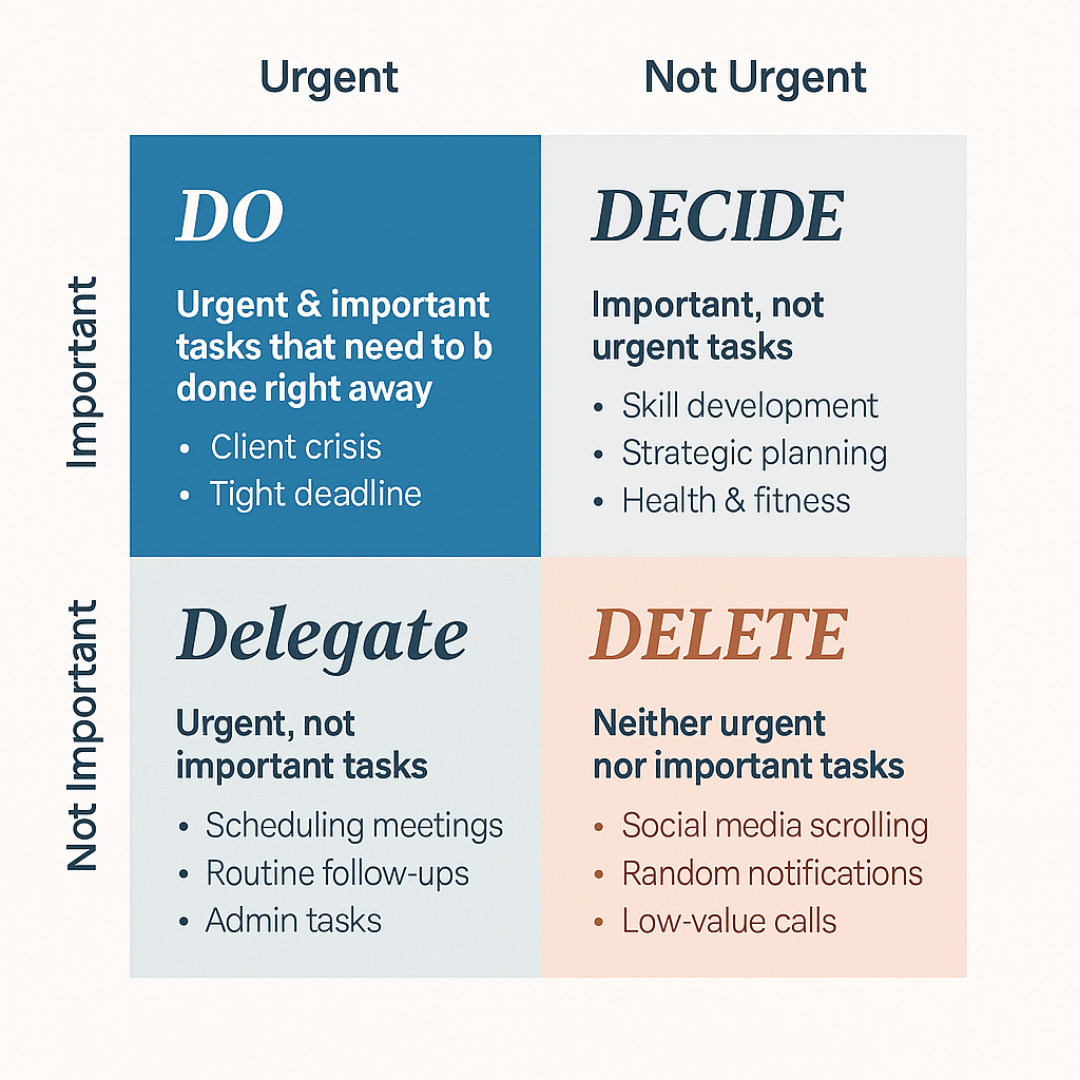
What it is: A prioritization method that forces you to separate urgent tasks from important ones.
How it works:
You divide your tasks into four quadrants:
- Urgent & Important — Do these now
- Important, not Urgent — Schedule these
- Urgent, not Important — Delegate or minimize
- Neither — Eliminate
- Leaders juggling strategic goals vs fire-fighting
- Professionals with constantly shifting priorities
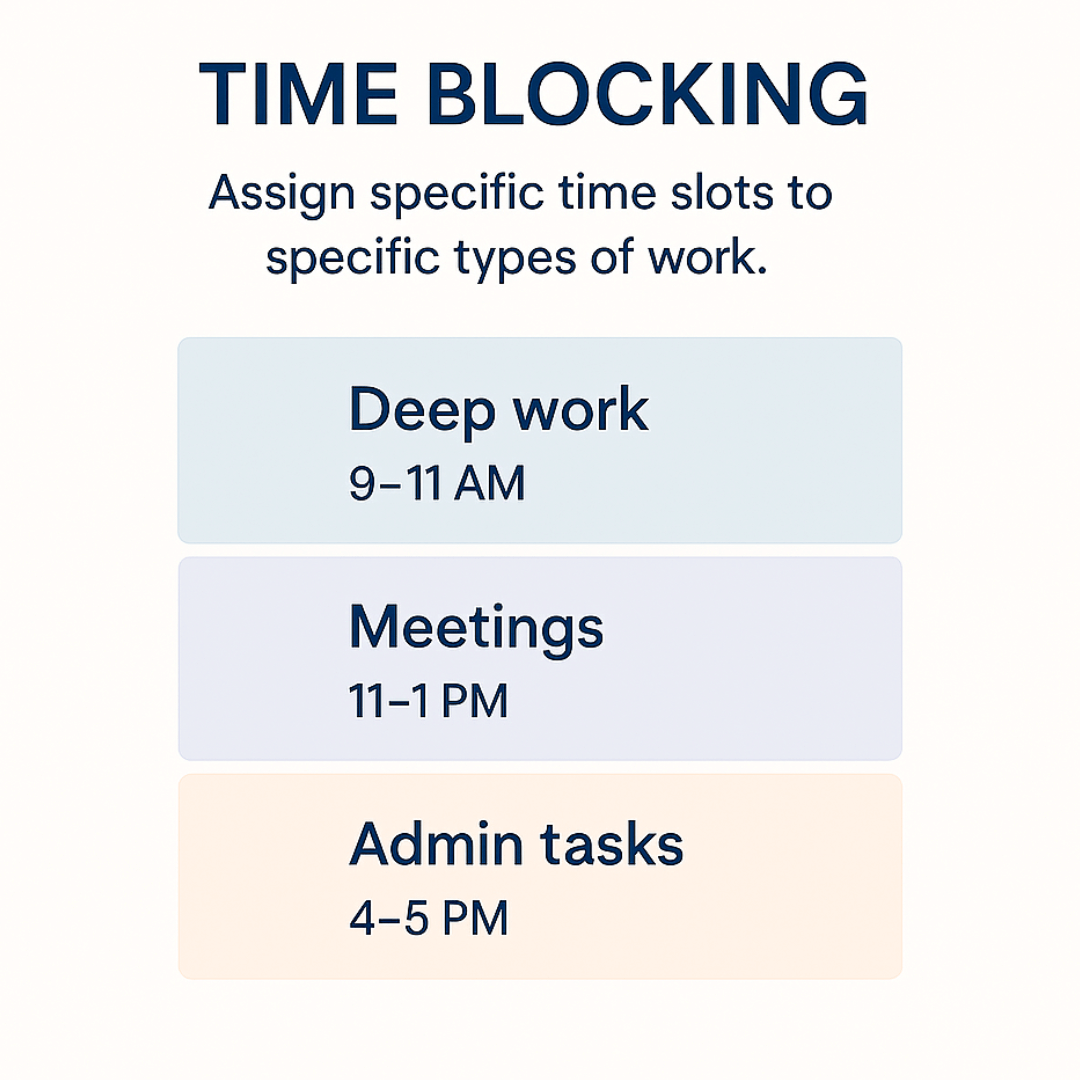
2. Time Blocking
What it is: A scheduling method that assigns specific time slots for your tasks or focus work.
How it works:
- Start by blocking time for your most important work first
- Then schedule meetings and administrative tasks
- Finally, leave buffer zones for transition and unplanned issues
- People distracted by context switching
- Professionals whose calendars get overloaded
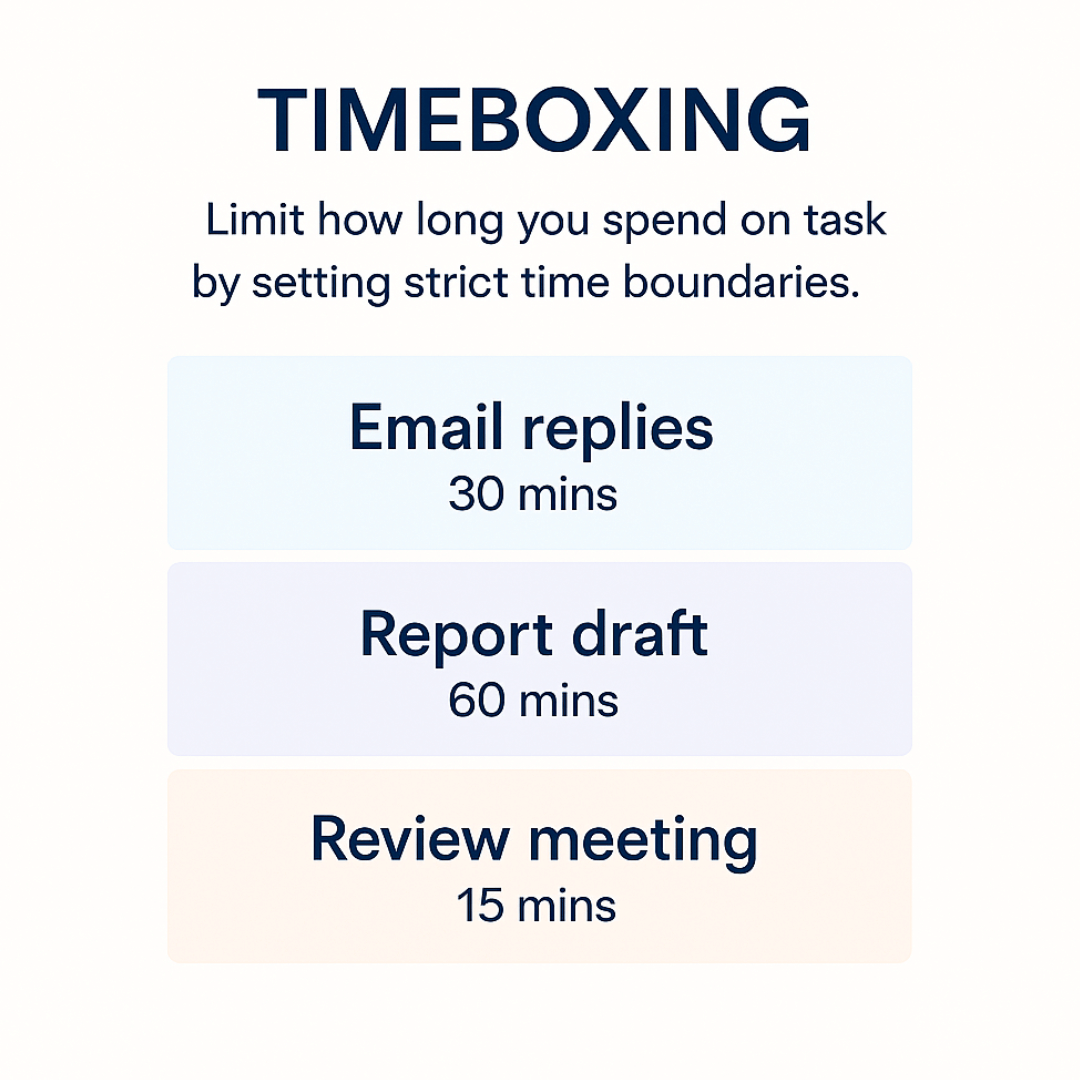
3. Timeboxing
What it is: Similar to time blocking but with a fixed time limit on tasks.
How it works: Set an exact start and end time for a task — not just a label on your calendar.
Who it works for:
- Perfectionists who over polish
- Teams with recurring, predictable tasks
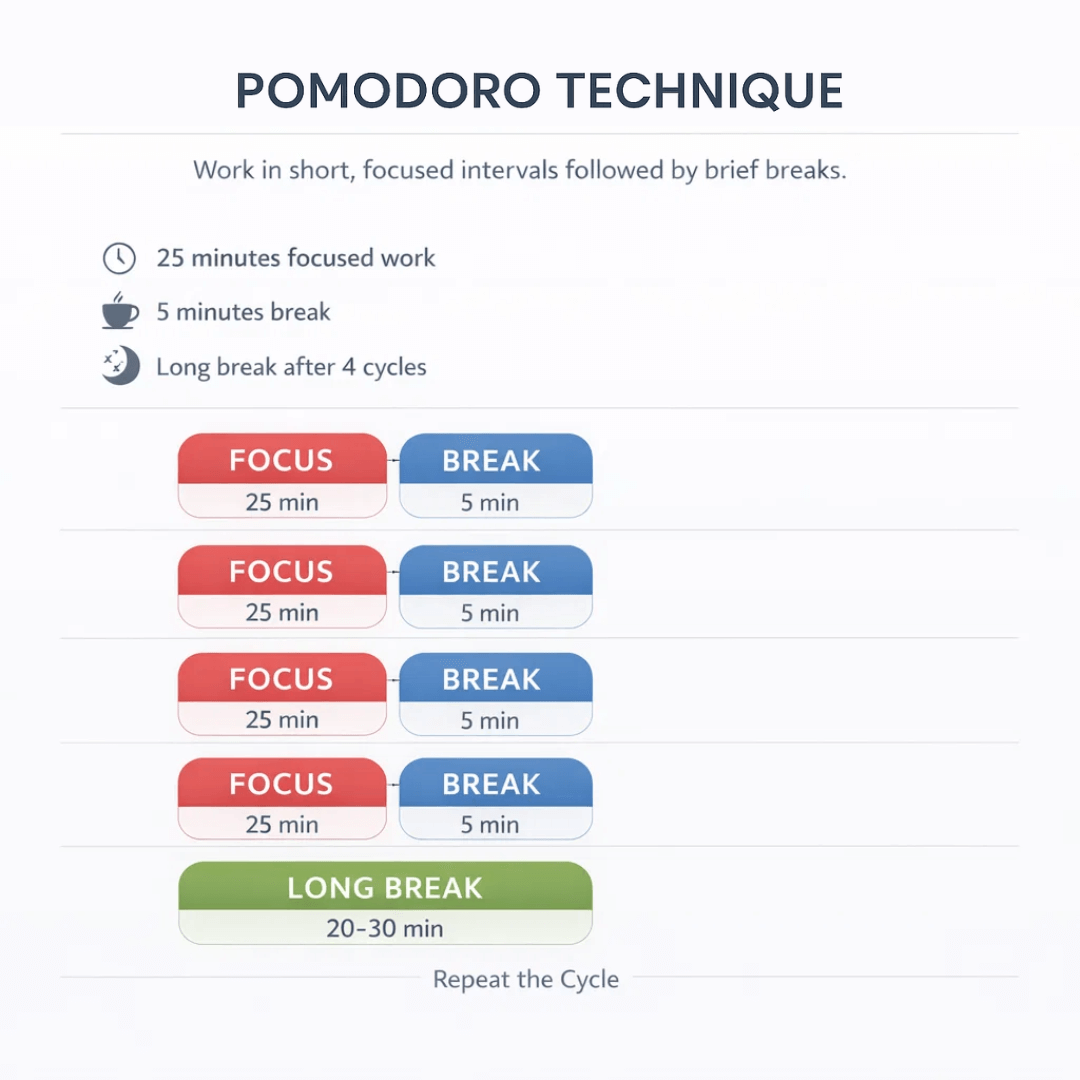
4. Pomodoro Technique
What it is: A focus technique that alternates concentrated work with short breaks.
How it works: Work for 25 minutes → break for 5 minutes. After four cycles, take a longer break.
Who it works for:
- People who lose focus easily
- Writers, coders, students, and analysts
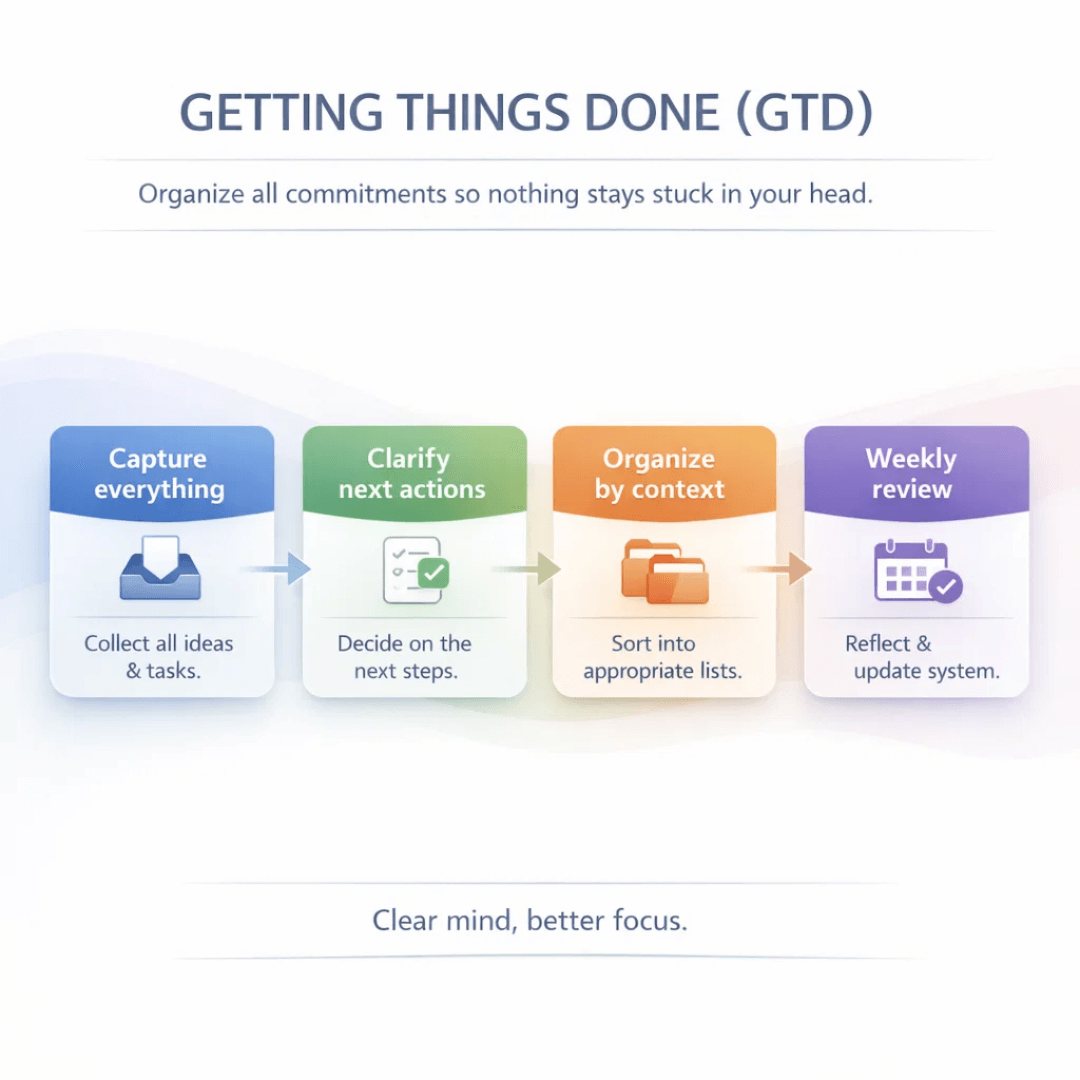
5. Getting Things Done (GTD)
What it is: A system for organizing and executing all your commitments without stress.
How it works:
- Capture everything that comes to mind
- Clarify what each item means
- Organize tasks into contexts/lists
- Review weekly
- Engage with tasks you’ve prepared
- Overloaded professionals
- People with many roles/responsibilities
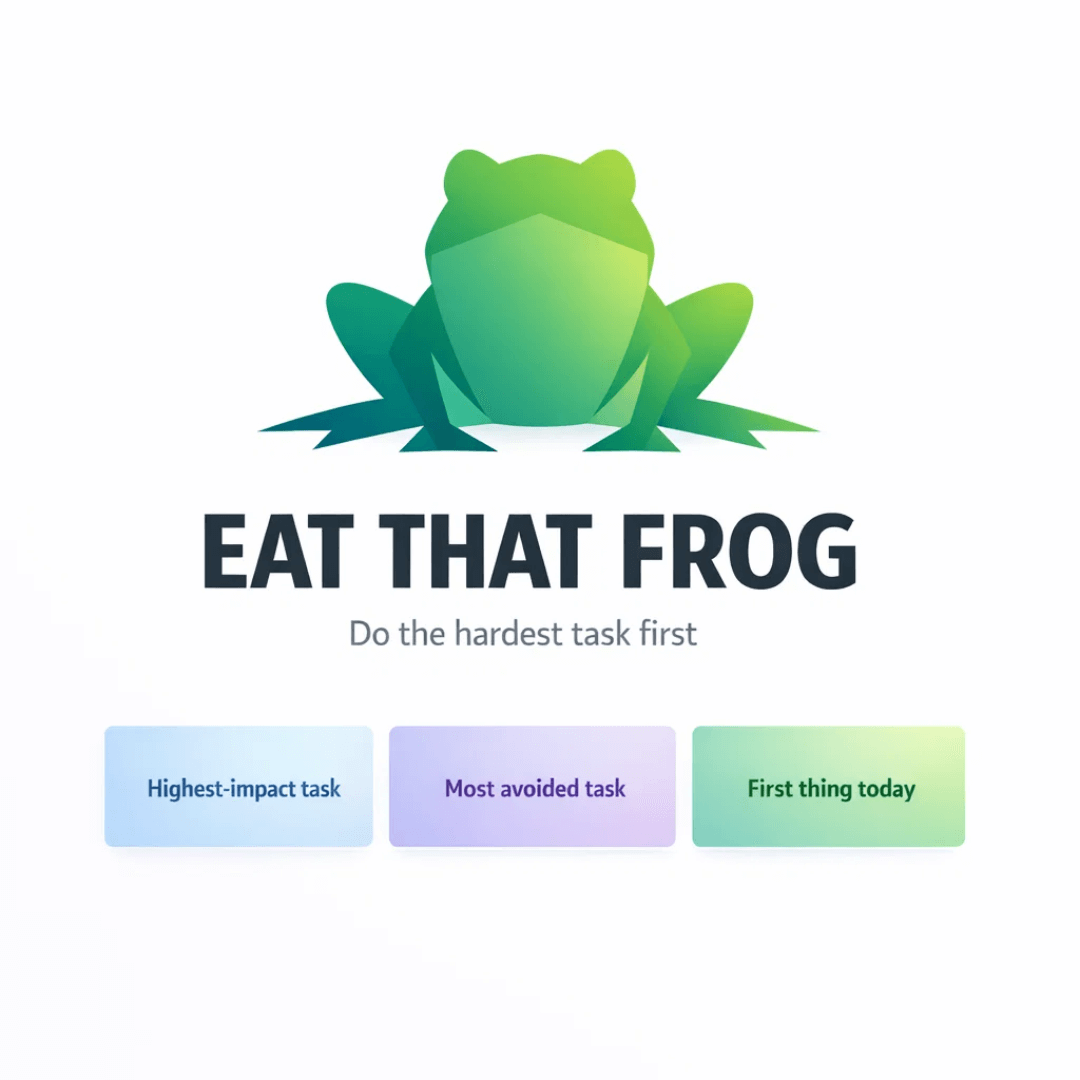
6. Eat That Frog
What it is: A simple method: do your hardest task first.
How it works: Identify the most important job of the day — the one you’re most likely to avoid — and complete it before anything else.
Who it works for:
- People who procrastinate
- Teams with high-impact but low-attention tasks
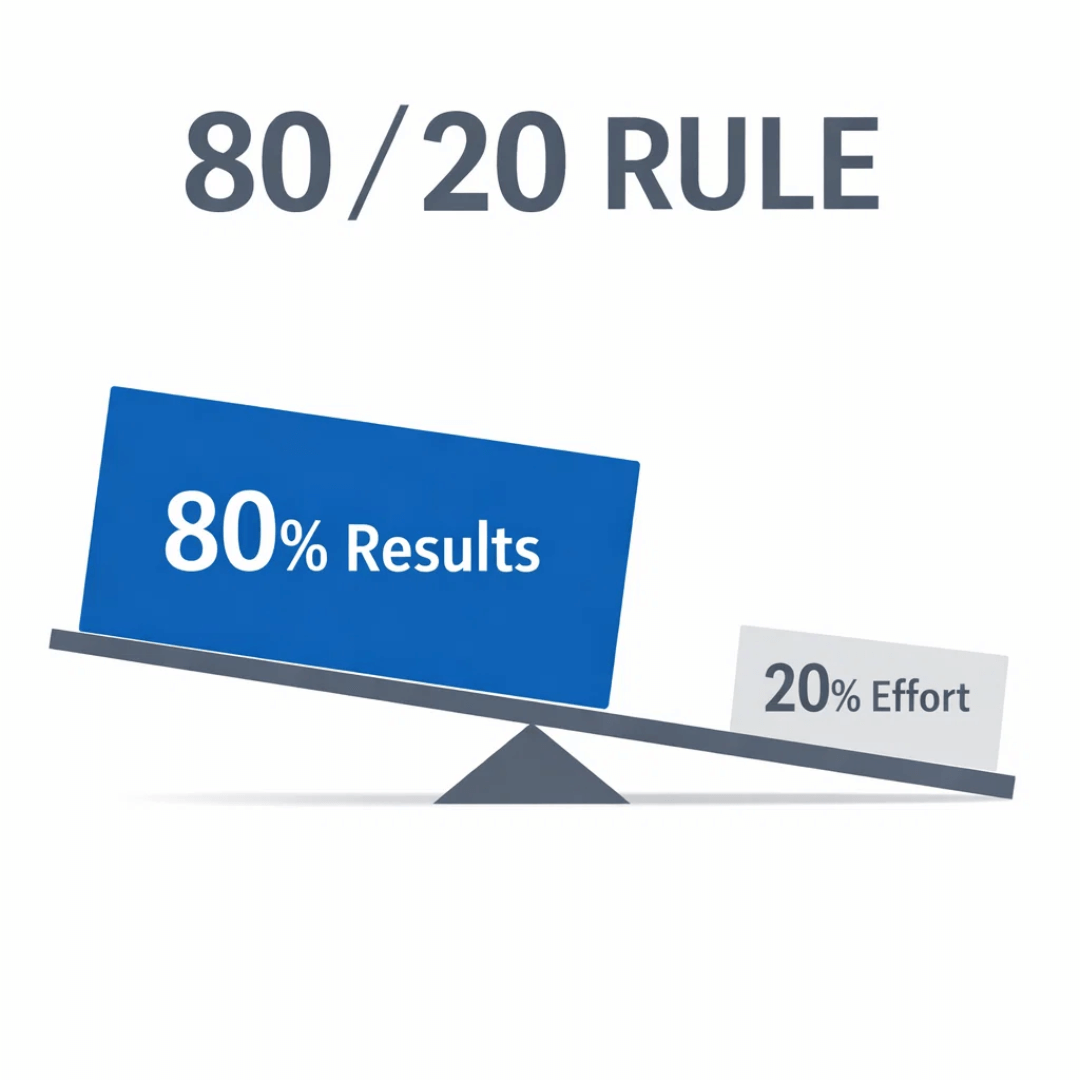
7. 80/20 Rule (Pareto Principle)
What it is: A principle stating that roughly 20% of work generates 80% of results.
How it works: Look at your activities and ask: which 20% matter most for outcome?
Who it works for:
- Managers allocating effort across teams
- Knowledge workers with lots of discretionary tasks
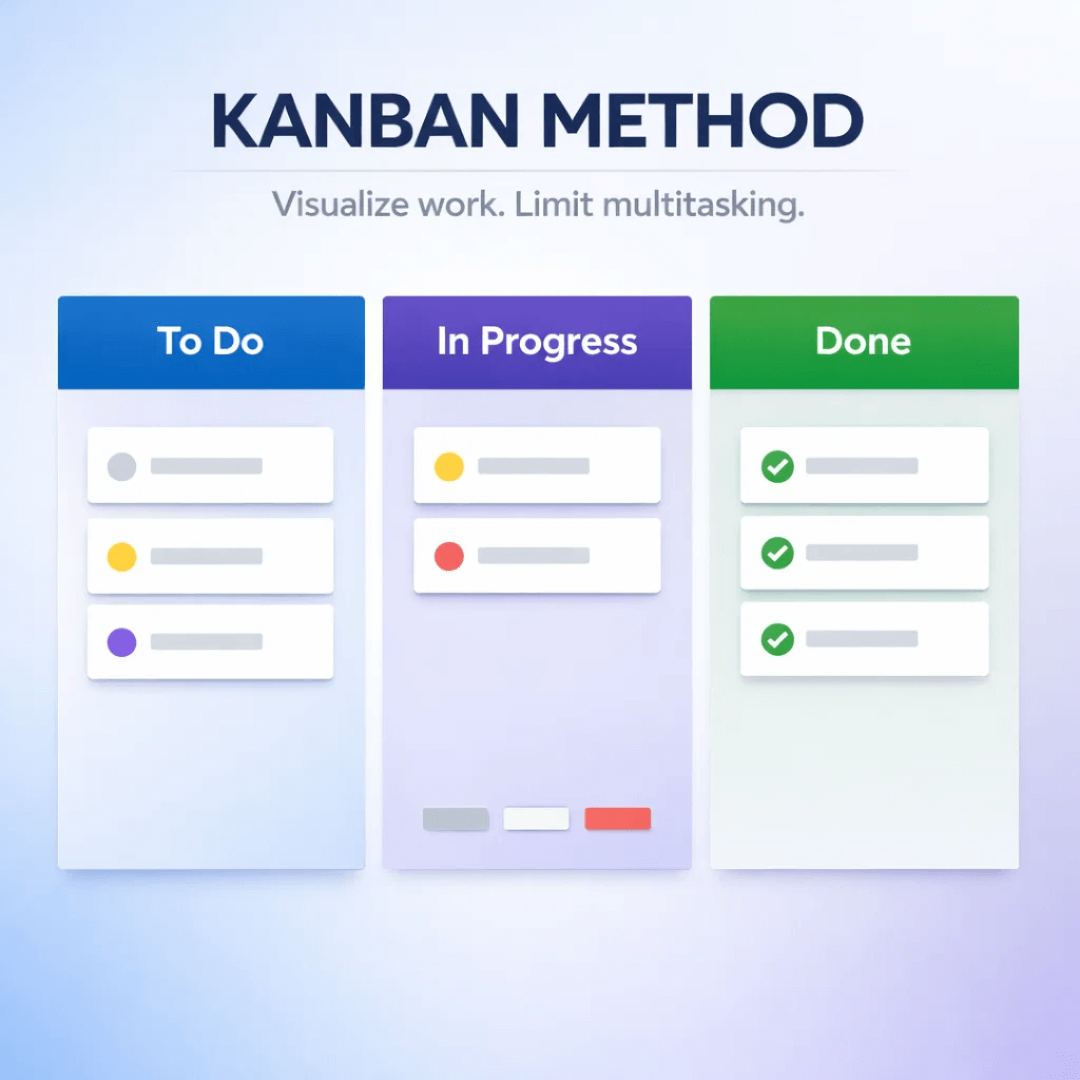
8. Kanban Method
What it is: A visual workflow management method that limits work in progress (WIP).
How it works: Tasks move through stages like: To Do → Doing → Done (or more elaborate workflows).
Who it works for:
- Teams handling multiple workstreams
- People who benefit from visual clarity
9. ABCDE Method
What it is: A simple prioritization technique where each task is graded from A (highest) to E (lowest). How it works:- A – Must be done
- B – Should be done
- C – Nice to do
- D – Delegate
- E – Eliminate
- People overwhelmed by long to-do lists
- Those needing quick decision clarity
10. The 2-Minute Rule
What it is: A rule: if something takes less than two minutes, do it immediately. How it works: Clear small tasks before they clutter your list — especially useful for emails or quick updates. Who it works for:- People who delay small tasks
- Professionals swamped by daily admin
11. Parkinson’s Law
What it is: A principle that work expands to fill the time given to it. How it works: If you set too generous a deadline, you’ll take too long to finish. Who it works for:- People who dilly-dally with open-ended tasks
- Teams with flexible deadlines
12. Weekly Review Method
What it is: A recurring check-in where you audit your tasks, progress, and priorities. How it works: Each week, ask:- What did I complete?
- What didn’t get done?
- What’s next week’s focus?
- What should I drop?
- People who feel constantly reactive
- Professionals juggling long-term goals and daily tasks
Time Management Tools That Support These Methods
Tools should support decision-making, not add overhead.
Useful categories include:
- Calendars for time blocking and timeboxing
- Task managers for GTD, ABCDE, Kanban
- Focus tools for distraction control
- Time analytics to understand patterns
Instead of tracking hours alone, look at:
- Focus time
- Context switching
- Unplanned work
- Meeting overload
These signals help refine your method over time.
Techniques That Work with Any Method
Regardless of the method you choose:
- Batch similar tasks
- Protect focus windows
- Set clear meeting agendas
- Reduce notifications
- Define “done” clearly
Consistency beats complexity.
Common Time Management Mistakes (and How to Avoid Them)
- Over-engineering systems
- Switching tools constantly
- Treating busyness as progress
- Skipping reviews
From experience, the most effective systems are simple enough to survive bad days.
According to a McKinsey study, only 9% of executives say they are very satisfied with how they allocate their time, and nearly half report that their time spent doesn’t closely align with their organization’s strategic priorities. This highlights how even senior leaders struggle with focus and prioritization, underscoring the importance of structured time management methods.
A Practical 7-Day Implementation Plan
You don’t need a full productivity overhaul to see results. What actually works is small, deliberate changes applied consistently. This 7-day plan is designed to help you move from intention to execution—without overwhelming yourself.
Think of this as a reset, not a reinvention.
Day 1: Audit Where Your Time Leaks
Before fixing anything, you need visibility.
Spend one workday observing:
- Where your time actually goes (not where you think it goes)
- How often you switch tasks
- What interrupts your focus
- Which tasks feel heavy but low-impact
You don’t need perfection—rough notes are enough.
Actionable tip: At the end of the day, list:
- 3 tasks that moved real outcomes
- 3 activities that consumed time but didn’t change anything
This contrast will immediately highlight what needs attention.
Day 2: Choose ONE Time Management Method
Resist the urge to try everything.
Based on yesterday’s audit, choose one primary method:
- Too many priorities → Eisenhower Matrix
- Distractions → Time Blocking
- Procrastination → Eat That Frog or Pomodoro
- Overload → Kanban or WIP limits
Actionable tip: Write down why you chose this method. That clarity will help you stick with it when the week gets messy.
Day 3: Define Clear Priorities
Today is about deciding what truly matters.
Identify:
- 1–3 high-impact outcomes for the week
- The tasks directly linked to those outcomes
Everything else is secondary.
Actionable tip: Ask yourself: “If I complete only these tasks this week, would it still be a good week?”
If yes, you’re prioritizing correctly.
Day 4: Block and Protect Focus Time
Now, move from planning to execution.
Use your calendar to:
- Block time for priority work first
- Schedule meetings around it
- Add buffers between tasks
Actionable tip: Treat focus blocks as commitments, not suggestions. If you wouldn’t casually cancel a meeting, don’t casually cancel focus time either.
Day 5: Limit Work in Progress
More tasks don’t mean more progress.
Whether you’re using Kanban or a simple to-do list:
- Limit active tasks to 3–5 at a time
- Finish before starting something new
Actionable tip: When a new task appears, pause and ask: “What will I stop or delay to make room for this?”
If nothing can move, the new task probably shouldn’t start yet.
Day 6: Measure Patterns, Not Hours
Today is about learning, not judging.
Look back at the week so far:
- When were you most focused?
- What caused interruptions?
- Which tasks took longer than expected?
- Where did unplanned work creep in?
Actionable tip: Don’t track hours obsessively. Instead, track:
- Focus time
- Context switching
- Meeting load
- Unplanned work
These patterns matter more than raw time.
Day 7: Review and Adjust
This is the most important day—and the most skipped.
Set aside 30–45 minutes to review:
- What worked?
- What didn’t?
- What felt heavy?
- What created momentum?
Then decide:
- What to keep
- What to simplify
- What to drop next week
Actionable tip: End your review by planning next week’s top 3 priorities. This ensures you start Monday with clarity instead of chaos.
Why This 7-Day Plan Works
- It builds awareness before action
- It avoids system overload
- It prioritizes execution over theory
- It creates a feedback loop early
Small structure changes, applied consistently, compound faster than any “perfect” productivity setup.
Final Thoughts
Time management isn’t about doing more. It’s about doing the right things with less friction.
From experience, the people and teams who improve fastest aren’t chasing perfect systems. They choose one method, review it weekly, and let reality—not intention—guide improvement.
Start small. Stay consistent. Let clarity compound.
FAQs
Time management methods are structured systems that help you plan, prioritize, and execute work effectively. Unlike simple to-do lists, these methods guide what to focus on, when to work on it, and what can be delayed or eliminated.
Time management methods are complete systems (such as Time Blocking or GTD), while techniques are specific tactics used within those systems (like Pomodoro or batching). Methods provide structure; techniques support execution.
The most effective methods depend on your challenge. For example, the Eisenhower Matrix helps with prioritization, Pomodoro improves focus, Time Blocking reduces distractions, and Kanban supports managing multiple tasks or projects.
For most professionals, Time Blocking combined with a Weekly Review works well. This approach provides daily structure while allowing flexibility to adjust priorities as work evolves.
Methods like Eat That Frog, Pomodoro, and the 2-Minute Rule are effective against procrastination because they reduce mental resistance and help build momentum quickly.
Start by identifying your biggest challenge—lack of focus, unclear priorities, or overload. Choose one method that directly addresses that problem and use it consistently for at least two weeks before evaluating results.
Tools improve productivity only when they support a clear method. Without a system, tools add complexity. When paired with the right method, they help visualize work, protect focus time, and measure improvement.
A method is working if work feels more controlled and predictable, deadlines are easier to meet, focus improves during work hours, and the need for overtime or last-minute rushes decreases.