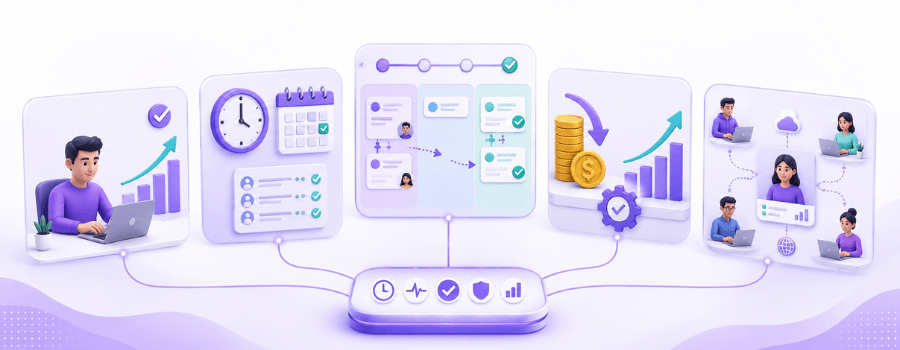
In today’s fast moving workplace, businesses really need better ways to handle productivity, watch performance and keep accountability clear. With remote work, hybrid teams and flexible schedules becoming more normal each month, the old employee management approach is often not enough anymore.
That’s where employee tracking software comes in as a practical business tool. Across different industries, companies are using employee monitoring software to get a wider view of what the workforce is doing, boost operational efficiency and make decisions based on actual information.
Instead of leaning on surveillance, modern employee productivity tracking software helps organizations understand how the work gets done, spot bottlenecks and back employee success in a steady way.
No matter if you run a small company or a bigger enterprise, choosing the right workforce tracking software can meaningfully lift team performance and strengthen business results.
In this article, we’ll jump into the top five benefits of employee tracking software and also why it turned into an essential solution for modern workforce management. You know, in real life teams move around, schedules change and somehow managers still need clear visibility. With the right software, things tend to feel smoother, less uncertain and more accountable for everyone involved.
What Is Employee Tracking Software?
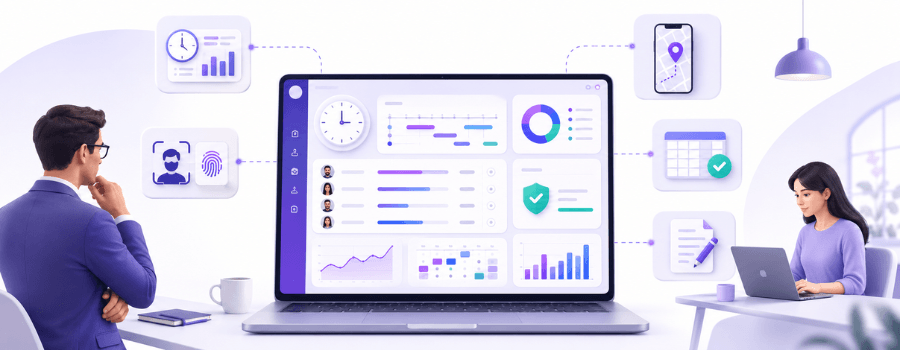
Employee tracking software is a digital platform that helps orgs monitor employee work hours, attendance, productivity, project progress and performance measure.
It collects real time data on workforce activities and turns it into useful reports insights, so managers can improve efficiency and overall output.
Most employee time tracking software solutions include features like:
- Time tracking stuff
- Attendance management
- Productivity oversight
- Project tracking
- Task management
- Workforce analytics
- Activity monitoring
- Automated reporting
When businesses bring workforce data into one place, they can get a more lucid view of employee performance and daily operational effectiveness too.
Why Are Businesses Investing in Employee Tracking Software?
Over the past decade, the workplace has changed a lot, honestly, more than people expect. Employees now work from different places, coordinate work across time zones and switch through multiple digital tools throughout the day.
That kind of flexibility brings growth openings but it also carries headaches, including things like:
- Less clear visibility into everyday operations
- Attendance logs that turn out inaccurate
- Gaps in output and execution
- Projects that drift into delays
- Complications with where resources should land
So, many companies are now moving toward employee monitoring software, to get more insight on how the workforce is doing while still keeping transparency and accountability.
The point isn’t to track every single action of each employee. It is to use the data to refine processes, boost productivity and enable business growth.
Benefit 1: Improves Employee Productivity
Creates Wider Awareness of Work Habits
One of the biggest advantages of employee productivity tracking tools is the uplift in productivity.
A lot of employees do not realize how much time gets lost to distractions, interruptions, unnecessary gatherings and inefficient workflows. With tracking software, there is a clearer view of daily work rhythms, so employees can better understand how they are really spending their time.
When people can see their productivity figures, they tend to become more focused and deliberate about managing their workload, even if they did not notice the issue before.
Identifies Productivity Bottlenecks
Every organization deals with productivity challenges and honestly it can feel messy. Some recurring problems show up like this:
- Frequent task switching
- Excessive social media usage
- Long idle periods
- Communication overload
- Unclear priorities
With employee tracking software, managers can spot these bottlenecks and act on them before they start affecting the overall business performance, too.
For instance, when team members spend an excessive amount of time moving around between several communication platforms, managers can simplify the workflow and cut back on unnecessary interruptions, altogether.
Supports Continuous Improvement
Productivity insights help managers provide better coaching and support.
Instead of making assumptions about performance, leaders can use data to:
- Improve employee training
- Remove workflow barriers
- Set realistic goals
- Encourage better time management
This creates a more productive and supportive work environment.
Benefit 2: Enhances Attendance and Time Tracking Accuracy
Eliminates Manual Tracking Errors
Manual attendance systems often end up with inaccuracies and a lot of admin friction, not always obvious at first. Employees may forget to log their hours, submit wrong timesheets or introduce minor data entry mistakes. When that happens payroll calculations can be thrown off and then more time is spent on cleanup tasks.
Employee time tracking software can automate attendance recording and help keep workforce records more reliable.
Reduces Time Theft
Time theft occurs when reported work hours do not accurately reflect actual working time.
Examples include:
- Buddy punching
- Extended breaks
- Inaccurate timesheets
- Unrecorded absences
By putting in employee tracking software organizations can enhance accountability a little and keep more exact attendance records, so you know what happens.
Simplifies Payroll Management
Payroll accuracy is critical for both employee satisfaction and business compliance.
Automated attendance tracking helps businesses:
- Calculate work hours accurately
- Manage overtime efficiently
- Reduce payroll disputes
- Improve compliance documentation
As a result, HR and payroll teams spend less time correcting errors and more time focusing on strategic initiatives.
Benefit 3: Provides Real-Time Project Visibility
Improves Project Management
Keeping several projects going can feel stressful when progress isn’t tracked with precision, because you end up guessing more than measuring.
Workforce tracking software gives managers a live window into project status, which helps them keep an eye on workload, upcoming due dates and task finish.
That clearer view means the organization can reach decisions sooner and with more confidence, rather than waiting for late reports or dealing with messy surprises later.
Identifies Delays Early
Many project failures occur because issues are discovered too late.
Employee tracking systems help managers identify:
- Delayed tasks
- Resource shortages
- Workload imbalances
- Team bottlenecks
Early intervention helps keep projects on schedule and reduces costly delays.
Enhances Team Collaboration
When employees have visibility into project progress and responsibilities, collaboration improves.
Team members can better understand:
- Individual responsibilities
- Project priorities
- Upcoming deadlines
- Shared objectives
This creates stronger alignment and improves overall project outcomes.
Benefit 4: Reduces Operational Costs and Increases ROI
Improves Resource Utilization
Every business wants to maximize the value of its workforce.
By analyzing workforce data, managers can identify:
- Underutilized employees
- Overloaded team members
- Inefficient processes
- Unnecessary operational expenses
These insights help organizations allocate resources more effectively.
Minimizes Productivity Losses
Tiny slowdowns in output can pile up in a big way over time, even when they seem trivial.
Like, if an employee loses one hour of useful work per day, in one year the expense quickly becomes significant.
Employee monitoring software assists organizations in regaining that lost effort by pointing out small bottlenecks and refining working habits.
Delivers Measurable Return on Investment
Employee productivity tracking software benefits usually outweigh the initial buy in, even if it feels a bit much at first. In the meantime businesses can reach savings by doing a few things, like
- enhanced output
- lower overtime expenses
- smarter workforce scheduling
- fewer payroll mistakes
- faster project execution
With these upgrades in place, the company tends to see better profitability right away and more steady long-term growth after that.
Benefit 5: Supports Remote and Hybrid Workforce Management
Provides Visibility Across Distributed Teams
Remote work has become a permanent piece of modern business operations, for many companies, anyway.
Still, running distributed teams brings its own frictions, for example coordinating people who are a bit far away, even when everyone is online including:
- Limited visibility
- Communication gaps
- Accountability concerns
- Performance measurement difficulties
Remote employee monitoring software helps deal with those challenges by giving managers real time workforce views and it’s really useful for making decisions.
Maintains Accountability Without Micromanagement
Successful remote management needs trust and also a clear window into what’s going on, not just a vibe.
Tracking software lets a manager linger on outcomes, rather than doing constant oversight and micro-supervision.
Employees can show their real productivity through objective performance metrics, which builds stronger accountability while still protecting workplace flexibility.
Improves Workforce Planning
Remote and hybrid groups often end up needing different kinds of oversight, which feels a bit confusing because it depends on how people work. Gathering tracking data helps organizations to
- grasp workforce patterns
- tune schedules and timing
- distribute workloads more evenly
- enhance team execution
With that in place, companies can maintain productivity whether employees are onsite or they are remote, without losing momentum.
Best Practices for Using Employee Tracking Software
Be Transparent
Employees should understand:
- What data is being tracked and what it looks like in practice
- Why tracking is necessary, even when it feels repetitive
- How the information will be used later and where it ends up
This transparency helps build trust and it improves overall employee acceptance, even when people are wary at first.
Focus on Improvement
The point of employee tracking software should be to help performance move forward, not to keep tabs on every single activity.
Use workforce insights to :
- Remove obstacles
- Boost productivity
- Back employee development
- Refine business processes
Respect Employee Privacy
Organizations should set up clear guidelines that juggle business priorities with employee privacy expectations, even when it feels a little awkward to do both at once.
When the rollout is done responsibly, it tends to create more committed involvement from employees and it delivers better overall results.
How to Choose the Right Employee Tracking Software?
When evaluating solutions, look for features such as:
Time and Attendance Tracking:- Automated attendance management improves payroll accuracy and workforce accountability.
Productivity Monitoring:- Track productive and non-productive activities to identify opportunities for improvement.
Project Tracking:- Monitor project progress, deadlines and workload distribution.
Reporting and Analytics:- Detailed reports provide actionable workforce insights.
Remote Workforce Support:- Choose software designed to support remote and hybrid teams.
Integration Capabilities:- Ensure the platform integrates with payroll, project management and HR systems.
Conclusion
As workplaces keep evolving, businesses need stronger tools to handle performance, productivity and responsibility. Employee tracking software gives organizations that added sight they need, so they can make smarter calls, streamline process work and help employees thrive
Some of the key benefits usually show up as
- Improved output and speed
- More dependable attendance record
- Clearer project visibility
- Lower everyday operational costs
- Better management for a remote workforce
When it is rolled out with clarity and used with care this kind of employee monitoring software becomes more than a “watching” tool. It can turn into a strategic plan for workforce tuning and business expansion
Companies that put money into employee productivity tracking software today tend to be better placed to boost efficiency, lift worker performance and reach sustained progress in a market world that stays competitive.
FAQ
Is employee tracking software legal?
In most regions, employee tracking is legal when the organizations follow local labor laws and they inform the employees about the monitoring practices, even when it seems normal.
Does employee tracking software reduce productivity?
When it is implemented properly, it often improves productivity by spotting inefficiencies and helps with better work habits, which is why people tend to see smoother workflows, more reliable routines..
Can remote employees be monitored effectively?
Yes. Modern remote worker monitoring software offers a view into the work hours, task advancement and overall productivity, without needing constant supervision. It gives visibility while people work, so managers do not have to linger nearby.
What industries use employee tracking software?
In industries like IT, healthcare, finance, manufacturing, customer service, logistics and professional services, many teams end up using software for monitoring staff, often called employee tracking platforms.
Is employee tracking software suitable for small businesses?
Yes. Small business owners can benefit from better workforce presence handling, steadier payroll exactness and more visible output tracking which sounds a bit straightforward but it really helps.