Introduction
As remote work, hybrid teams and digital workplaces keep getting more normal, many organizations start depending much more on employee monitoring tools, to watch productivity, handle workflows and protect company assets. It can range from observing attendance and screen actions to recording application usage and internet behavior. In practice businesses are putting in place different kinds of workplace surveillance, aiming for better operational speed.
Still, with employee monitoring software being adopted more widely, employers have to learn the legal lines around workplace monitoring. Even though companies have reasonable motivations to follow employee activities, they still should respect employee privacy and they must follow Indian labor rules plus data protection requirements.
Getting a solid grasp on employee monitoring rules in India is important for preventing legal headaches, keeping employee trust intact and encouraging ethical workplace behavior. This quick guide explains the legal structure around monitoring, what employers can do in practice, how worker privacy should be treated and practical ways to set up tracking tools in a lawful, responsible manner.
What Is Employee Monitoring?
Employee monitoring is the process of tracking and then analyzing what an employee does during the working hours, it is used to keep a close eye on various actions. In many organizations, monitoring tools are used to boost productivity, make sure policies are followed, safeguard confidential data and coordinate remote workforces.
A few common types of workplace monitoring can include
- Time and attendance tracking
- Screen monitoring
- application and website usage tracking
- Keyboard and mouse activity monitoring
- GPS location tracking
- Email and communication monitoring
- Project and task tracking
- Network and system access monitoring
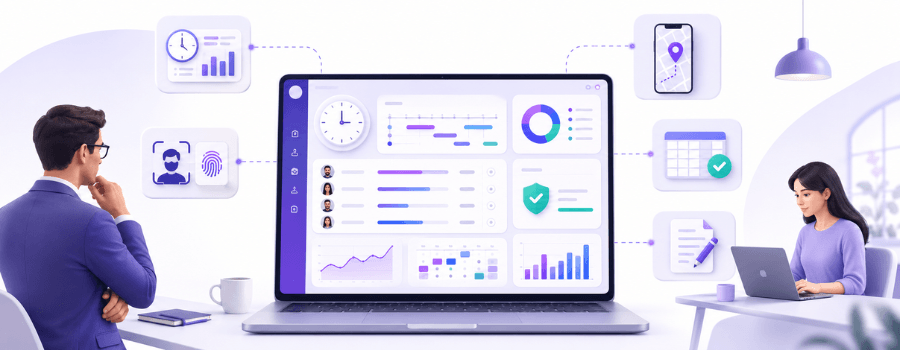
Modern employee tracking software gives real-time sight into workforce activities, this helps managers make better decisions while also strengthening accountability between teams.
Is Employee Monitoring Legal in India?
The short answer is yes.
Employee monitoring is usually legal in India, when it’s done for legitimate business reasons and when it is rolled out in a transparent way. Employers generally have the ability to look at what happens on company-owned devices, networks and systems.
But, it is not unlimited.
Organizations should make sure their monitoring practices do things like
- Have a real business reason,
- Respect the employee privacy rights
- Follow relevant labor rules
- Meet data protection obligations
- Tell employees about what is being monitored
Employers can not use overly broad, hidden or overly invasive surveillance, especially in ways that break an employee’s reasonable expectation of privacy.
In the end, whether workplace monitoring is lawful often depends on the way it’s carried out and also whether workers are properly informed in advance.
Key Laws That Impact Employee Monitoring in India
Even though India does not really have one specific statute devoted exclusively to worker monitoring, there are several legal frameworks that end up shaping workplace surveillance practices.
Digital Personal Data Protection Act (DPDP Act)
The Digital Personal Data Protection Act has become one of the most important regulations in terms of workplace monitoring, it is affecting how companies run their day to day operations.
Under the DPDP framework employers who are gathering employee-related data have to follow certain steps, such as process personal data lawfully and stick to collecting only what is needed. It also means Protect stored employee data and Use the data only for legitimate purposes. At the same time, maintain transparency when personal data is collected, so employees are not left guessing.
If an organization uses employee monitoring software and gathers personal information, it needs to make sure the whole approach to that data handling lines up with DPDP requirements. Sometimes the activity looks mundane, but if monitoring involves collecting identifiable employee information then it can fall within data protection duties, even when the software is being used for operational oversight.
Information Technology Act, 2000
The Information Technology Act gives legal clout to electronic records and it also handles a lot of the cybersecurity issues, with a strong focus on things that can go wrong online.
For employers, the Act really puts the spotlight on a few practical necessities, like protecting sensitive information and keeping it properly locked down. It also highlights preventing unauthorized access and it pushes securing digital systems in a way that does not leave weak points. On top of that, employers are expected to maintain cybersecurity controls and to make sure the measures are actually being used.
When organizations monitor systems that are meant to protect company networks and to stop data breaches, these actions are often backed by legitimate business interests under the IT compliance framework.
Employment Contracts and Workplace Policies
Employment agreements take on a key role in day to day workplace monitoring and they are not just formal papers. Many organizations add language that tries to clarify things like monitoring practices, the use of company devices, what is considered acceptable internet usage and also the email monitoring procedures. There is usually something about data security expectations too.
After employees acknowledge the workplace monitoring policies organizations end up with stronger legal backing for their monitoring programs.
Constitutional Right to Privacy
India’s Supreme Court, in the Puttaswamy judgment, recognized privacy as a fundamental right in a way that really matters.
So this decision has real weight for workplace monitoring, because once you treat privacy as basic, then watching people at work becomes more tricky. Employers can still look at work-related tasks, but the surveillance has to stay reasonable and proportionate. If the monitoring goes too far, meaning it pokes into personal privacy more than necessary, it could be challenged in court.
In practice, employers should weigh their business needs against employee privacy rights and not push a single interest too hard.
Types of Employee Monitoring Generally Considered Acceptable
Some kinds of monitoring are broadly accepted when it is done transparently and for real business reasons, which is, you know, legitimate. It’s just that if you do it right people tend to accept it, even when the process is a bit more intrusive than expected.
Attendance and Time Tracking
Keeping tabs on employee working hours is one of the more everyday practices in the office, like, workplace monitoring that people just do.
Most organizations use employee tracking software so they can
- Log login and log out times
- Handle attendance
- Monitor project hours
- Produce payroll reports
These tasks are usually treated as lawful, since they really connect back to workforce management and not something random.
Screen Monitoring
A lot of firms lean on screen monitoring tools, to catch on productivity patterns and also to make sure tasks are actually getting finished. In real life it can feel a bit more complicated than just watching though.
Typically, screen monitoring can involve the following, like
- Periodic capture of the screen images
- Tracking which window is currently active
- Watching how employees use applications
Companies should clearly announce these methods through workplace policies, not leave it implied.
Website and Application Usage Monitoring
Organizations often keep an eye on the websites and web apps reached via company devices.
That tends to help businesses: boost productivity, lower security risks, stop misuse of corporate resources and enforce workplace rules.
In general, keeping track of company-owned systems for business related reasons is acceptable when workers are notified ahead of time.
Network Security Monitoring
Cybersecurity threats keep rising across different industries and it feels like no one can quite keep up.
Employers usually look at
- Login attempts
- File transfers
- System access
- Network activity
They say this checking is mainly because they want to secure company assets and confidential information.
Monitoring Practices That May Create Legal Risks
Not all surveillance practices are legally safe in the end, you know, because there are gray areas in how it gets applied.
Employers ought to steer clear of monitoring methods that might be interpreted as excessive or invasive.
Secret Monitoring
Monitoring employees without their knowledge, can raise serious legal worries and also ethical ones, maybe more than people realize. In practice it feels easier, but it often gets messy later.
Transparency is one of the key foundations when it comes to workplace surveillance, because employees need to know what’s happening.
Employees should be made aware of several things: what exactly is being monitored, why monitoring occurs, how the information is used after it is captured and who is allowed to see the collected data.
Monitoring Personal Devices Without Permission
Remote work settings usually end up in a situation where employees own and use the devices themselves, at least most of the time.
Employers have to be a little cautious about watching anything on personal machines, since workers generally hold higher privacy expectations for their own hardware. Even when a company feels entitled, people still expect stronger confidentiality.
Whenever you can, organizations should try to split monitoring for personal use from monitoring tied to job duties, so the two streams are not mixed in practice.
Excessive Surveillance
Continuous observation via webcams, sound recording or extremely intrusive tracking methods might end up being disproportionate.
The monitoring needs to stay tied, to valid business purposes, not drift into something else.
Gathering more data than is really required raises legal exposure as well as reputational risk, in a noticeable way.
Monitoring Private Communications
Employers should avoid reaching into personal emails, private messaging accounts or unrelated personal details unless there is a lawful and clearly justified cause. When you respect an employee’s privacy, trust stays higher and compliance questions get reduced too.
Why Transparency Matters in Employee Monitoring
Transparency is honestly one of the most solid safeguards against legal disputes, especially when people are actually able to see what is going on.
Employees are more willing to accept monitoring when they understand the purpose behind it, not just the technical details.
Organizations should clearly communicate, like in plain language:
- Monitoring objectives,
- Data collection methods
- Data retention periods
- Employee rights
- Security measures
When that message is clear, it reduces misunderstandings and helps build a culture of responsibility.
In many cases, a well documented employee monitoring policy acts as the main base for compliant workplace surveillance.
Creating a Legally Compliant Employee Monitoring Policy
Every organization that uses employee monitoring software should create a documented monitoring policy.
That policy should cover, at least, a few things and it should be written down clearly, because otherwise people will misread it.
Purpose of Monitoring
Explain why monitoring is necessary.
Examples include:
- Productivity management
- Security protection
- Compliance requirements
- Resource optimization
Types of Data Collected
Clearly identify monitored activities such as:
- Login records
- Screen activity
- Website usage
- Attendance data
Employee Notification
Employees should acknowledge the policy during onboarding or during implementation.
Documented consent and acknowledgment can strengthen compliance efforts, for example, by making expectations clearer.
Data Retention Practices
Organizations should specify:
- How long monitoring data is stored
- Who can access the information
- When data is deleted
Security Measures
Employers have to guard the gathered data,from unauthorized access or misuse,and also from breaches and such.
Solid security measures help with meeting legal requirements and they help keep employee trust.
Employee Monitoring for Remote and Hybrid Workforces
Remote work has really caused a big rise in the use of employee monitoring software across India, even if the reasons sound simple on paper it has become more common in daily operations.
Managers usually run into a few headaches like poor visibility into what people are doing day to day. Then there is the project trail that gets confusing fast and attendance handling becomes a real concern too. Add to that collaboration gaps, where coordination feels slow or unclear.
In general these monitoring solutions help organizations keep up productivity, while also supporting teams that are operating from far away.
But remote monitoring does need more care, because employees may be working from home using their personal devices, their own internet connections or places that are shared with others. Companies should make sure the monitoring stays aimed at job related work, not at personal routines, personal spaces or anything beyond the tasks.
A balanced approach tends to support compliance as well as employee satisfaction.
Best Practices for Ethical Employee Monitoring
Legal compliance alone is not enough.Employers should also focus on ethical monitoring practices.
Monitor Outcomes, Not Every Action
Instead of keeping track of every employee movement all the time organizations should place focus on business results that you can measure, plus clear performance indicators.
Collect Only Necessary Data
Avoid getting too much information, like really, if its not needed. Collect only what matters for the business side, for operational work, for productivity steering or for security aims.
Limit Access to Monitoring Data
Only authorized people should be able to access the employee monitoring records, for real. Access controls help cut privacy risks and they also strengthen data security, which is important in practice.
Regularly Review Monitoring Policies
Laws, technologies and what people expect at work keeps moving ahead. Organizations should recheck and update their policies every so often, so they stay both compliant and genuinely useful, not only on paper but in day to day practice.
Maintain Open Communication
Employees should have openings to ask questions and really grasp what monitoring is about, even if it feels a bit indirect at times, because it helps a lot. When the process is clear, transparency builds trust and it boosts acceptance.
Benefits of Compliant Employee Monitoring
When put into practice responsibly, employee tracking can bring a few real business benefits.
These could include:
- Improved workforce productivity
- Better attendance management
- Enhanced cybersecurity
- Reduced insider threats
- Accurate project tracking
- Improved resource allocation
- Greater accountability
- Better compliance reporting
Modern employee tracking software helps organizations meet these objectives while keeping things legal and ethical and it does that pretty well too, in a way that’s still sensible and compliant.
Conclusion
Employee monitoring has turned into a sort of essential component for workforce management these days, especially since remote and hybrid work setups keep expanding. In India, employee monitoring laws do let employers keep tabs on work-related activities, but organizations still need to juggle their operational demands with employee privacy rights, not ignore one side completely.
What usually makes monitoring lawful is transparency, proportionality, data protection and having workplace policies that are actually clear. Employers should speak up about monitoring practices in advance, gather only what is needed and make sure everything matches the changing requirements around data protection.
If businesses adopt ethical monitoring methods and rely on dependable employee monitoring software, they can boost productivity, enhance security and preserve employee confidence while remaining compliant with Indian regulations.