Introduction
Managing a team today looks very different than it did a few years ago. Employees work from offices, homes, coworking spaces, and even across different time zones. While this flexibility improves employee satisfaction, it also creates new challenges for managers. Questions like Are projects progressing on time?, Where is productive time being spent?, and How can I improve team efficiency without micromanaging? have become increasingly common.
This is where the benefits of using employee tracking software become evident. Modern employee tracking solutions aren’t designed to watch every click an employee makes. Instead, they help organizations understand work patterns, remove productivity bottlenecks, improve accountability, and make smarter business decisions using real-time insights.
In this guide, we’ll explore the top benefits of using employee tracking software, explain why businesses are increasingly adopting these solutions, and share best practices for choosing and implementing the right software.
What Is Employee Tracking Software?
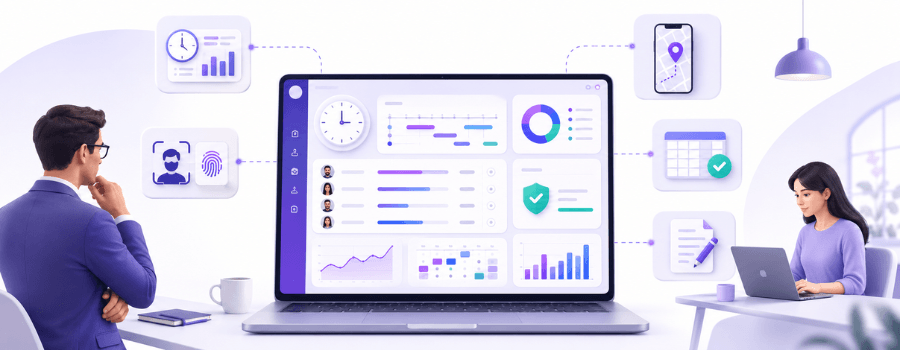
Employee tracking software is a productivity and workforce management solution that helps organizations monitor how employees spend their working hours. Depending on the platform, it can track:
- Time spent on projects and tasks
- Application and website usage
- Attendance and work hours
- Idle versus active time
- Productivity trends
- Team performance reports
- Project progress
- Optional screenshots and activity logs (based on company policies)
Modern employee tracking software goes far beyond traditional time tracking. Instead of simply recording clock-in and clock-out times, it provides managers with meaningful insights that improve workflow planning, project management, and resource allocation.
The best platforms focus on transparency, giving both employees and managers access to productivity data that helps everyone work more efficiently.
Why Are Businesses Investing in Employee Tracking Software?
The modern workplace has become increasingly distributed. Hybrid work, remote teams, outsourced developers, freelancers, and global collaboration have changed how organizations manage productivity.
Without visibility into daily operations, managers often rely on assumptions instead of actual performance data.
Businesses are investing in employee tracking software because it helps them:
- Improve productivity without unnecessary supervision
- Manage remote and hybrid teams more effectively
- Identify workflow bottlenecks
- Reduce operational costs
- Improve project planning
- Increase accountability
- Generate accurate timesheets
- Support data-driven decision-making
One pattern seen across organizations is that businesses rarely adopt employee tracking software because they don’t trust their teams. More often, the goal is to gain visibility into workflows, identify operational bottlenecks, and make informed decisions based on reliable data rather than assumptions. When implemented transparently, these tools become a foundation for continuous improvement instead of employee surveillance.
Rather than focusing on employee surveillance, successful organizations use tracking software as a continuous improvement tool.
Benefit 1: Improves Employee Productivity
One of the biggest benefits of using employee tracking software is improved productivity.
Many employees aren’t intentionally unproductive. Instead, they lose valuable time switching between tasks, attending unnecessary meetings, or getting distracted by non-work activities.
Consider a software development team that discovers developers are spending nearly two hours each day waiting for code reviews instead of writing code. By streamlining the review process and balancing workloads, the team improves delivery speed without increasing working hours. This illustrates an important point: productivity gains often come from removing process inefficiencies rather than expecting employees to work longer. This is just one example of how productivity insights reveal opportunities for improvement.
Identifies Productivity Bottlenecks
Improving productivity isn’t just about working faster—it’s about understanding what’s slowing your team down. Employee tracking software helps identify productivity bottlenecks by highlighting where time is being spent, which tasks take longer than expected, and where workflows become delayed.
For example, a team may discover that employees spend more time switching between applications or waiting for approvals than completing actual project work. With these insights, managers can address process inefficiencies, redistribute workloads, or automate repetitive tasks. Instead of relying on assumptions, they can make informed decisions that improve efficiency across the organization.
Supports Continuous Improvement
The real value of employee tracking software comes from using productivity data to make ongoing improvements rather than one-time changes. By regularly reviewing reports and performance trends, businesses can identify opportunities to streamline workflows, optimize resource allocation, and enhance team collaboration.
Rather than measuring productivity solely by hours worked, organizations can focus on outcomes and use insights to refine processes over time. This continuous improvement approach helps teams adapt to changing business needs, maintain consistent performance, and create a more efficient work environment without increasing employee workload.
Benefit 2: Enhances Time Management and Accountability
Poor time management affects project deadlines, customer satisfaction, and overall profitability.
Eliminates Manual Tracking Errors
- Automatically records employee work hours and activities.
- Reduces errors caused by manual timesheet entries.
- Prevents duplicate or missing time records.
- Improves the accuracy of attendance and productivity data.
- Provides reliable records for reporting and performance evaluation.
Reduces Timesheet Management Effort
- Automatically generates accurate timesheets.
- Eliminates the need for manual time entries.
- Reduces administrative workload for managers and HR teams.
- Speeds up timesheet reviews and approvals.
- Allows employees to spend more time on productive tasks.
Simplifies Payroll Management
- Calculates work hours, overtime, and billable hours accurately.
- Reduces payroll errors caused by incorrect time records.
- Simplifies salary processing with automated time data.
- Helps ensure employees are paid accurately and on time.
- Saves HR and finance teams valuable processing time.
Benefit 3: Supports Better Project Management
Improves Project Management
Employee tracking software helps managers oversee projects more effectively by providing real-time visibility into tasks, timelines, and team performance. This allows teams to stay organized and complete projects more efficiently.
- Tracks project progress in real time.
- Improves resource allocation.
- Helps prioritize important tasks.
- Keeps projects on schedule.
Identifies Delays Early
With real-time productivity insights, managers can identify delays before they impact project deadlines. Addressing bottlenecks early helps teams maintain steady progress and avoid last-minute challenges.
- Detects workflow bottlenecks quickly.
- Flags overdue or delayed tasks.
- Enables timely corrective action.
- Reduces the risk of missed deadlines.
Enhances Team Collaboration
Employee tracking software gives everyone better visibility into project status and individual responsibilities. This improves communication, encourages accountability, and helps teams collaborate more effectively.
- Increases visibility across projects.
- Clarifies team responsibilities.
- Reduces communication gaps.
- Promotes accountability and teamwork.
Benefit 4: Enables Data-Driven Decision Making
A common mistake many organizations make is relying on assumptions when planning workloads or making hiring decisions. Teams that regularly review productivity trends, project timelines, and resource utilization reports are better equipped to prevent burnout, forecast capacity, and allocate work where it’s needed most.
This data also helps organizations :
Improves Resource Utilization
Employee tracking software helps businesses understand how time and resources are being used across teams. With clear productivity insights, managers can balance workloads, assign tasks more effectively, and ensure resources are utilized where they create the most value.
Minimizes Productivity Losses
By identifying idle time, workflow bottlenecks, and inefficient processes, employee tracking software helps organizations reduce productivity losses. Managers can address these issues early, allowing teams to stay focused and maintain consistent performance.
Delivers Measurable Return on Investment
Employee tracking software provides actionable data that helps businesses improve efficiency, reduce operational costs, and optimize resource allocation. Over time, these improvements contribute to higher productivity, better project outcomes, and a measurable return on investment (ROI).
Benefit 5: Helps Manage Remote and Hybrid Teams Effectively
Managing remote employees requires trust, communication, and visibility.
Employee tracking software provides managers with enough operational insight to support distributed teams without constant check-ins.
Key advantages include:
Provides Visibility Across Distributed Teams
Employee tracking software gives managers a clear view of work progress across remote, hybrid, and distributed teams. This visibility helps ensure projects stay on track without requiring constant check-ins.
- Tracks work progress in real time.
- Provides insights into team productivity.
- Monitors project status across locations.
- Supports better coordination between teams.
Maintains Accountability Without Micromanagement
Rather than relying on frequent status updates, managers can use productivity data to understand progress objectively. This creates accountability while giving employees the autonomy to manage their work effectively.
- Promotes transparency in daily work.
- Reduces the need for constant supervision.
- Encourages ownership of tasks.
- Builds trust through data-driven insights.
Improves Workforce Planning
Workforce analytics help managers understand team capacity, workload distribution, and future resource needs. These insights make it easier to plan projects, allocate resources, and support business growth.
- Identifies workload imbalances.
- Supports smarter resource allocation.
- Improves capacity planning.
- Helps forecast future staffing needs.
Best Practices for Using Employee Tracking Software
The software itself doesn’t improve productivity—how you implement it does.
Here are some best practices to maximize results:
Be Transparent
Transparency is the foundation of successful employee tracking. Before implementing the software, clearly communicate why it is being introduced, what information will be collected, and how the data will be used. Open communication helps employees understand that the goal is to improve productivity and workflows—not to monitor every action.
- Explain the purpose and benefits of the software.
- Clearly define what data is collected.
- Share how productivity reports will be used.
- Encourage employees to ask questions and provide feedback.
- Keep company policies accessible and easy to understand.
When employees know what to expect and why the software is being used, they are more likely to trust the process and actively support its implementation.
Focus on Improvement, Not Surveillance
Use employee tracking software to improve workflows rather than monitor every employee action. Productivity insights should help managers identify bottlenecks, optimize processes, and support employees in achieving better results.
- Focus on improving workflows and efficiency.
- Use insights for coaching, not micromanagement.
- Measure outcomes instead of activity.
- Continuously optimize work processes.
Organizations that achieve the best long-term results treat employee tracking software as a coaching and optimization tool rather than a monitoring system. When employees understand how productivity insights help improve workflows, remove bottlenecks, and support better planning, adoption becomes smoother and trust remains intact.
Respect Employee Privacy
Protecting employee privacy is essential for successful implementation. Collect only the information needed for business purposes and ensure employees understand how their data is managed.
- Collect only relevant business data.
- Follow privacy regulations and company policies.
- Limit access to employee data.
- Be transparent about data usage.
Respecting privacy helps build employee confidence while ensuring the software supports productivity without compromising trust.
How to Choose the Right Employee Tracking Software?
Not every solution offers the same capabilities.
When evaluating employee tracking software, consider the following factors:
Ease of Use
Choose software that employees can adopt with minimal training.
Productivity Insights
Look beyond time tracking and prioritize platforms that provide actionable productivity analytics.
Reporting Features
Comprehensive dashboards and customizable reports simplify decision-making.
Project Management Integration
Software that integrates with your existing project management tools reduces manual work.
Security and Privacy
Ensure the platform includes strong security measures, user permissions, and compliance features.
Scalability
Select software that can grow alongside your business as your workforce expands.
Customer Support
Responsive support and onboarding resources make implementation much smoother.
The best employee tracking software should improve visibility while creating a better work experience for both employees and managers.
Conclusion
The benefits of using employee tracking software extend far beyond monitoring employee activity.
When implemented thoughtfully, these tools help organizations improve productivity, strengthen accountability, optimize project management, support remote and hybrid teams, and make data-driven decisions with confidence.
The most successful businesses don’t use employee tracking software to control employees—they use it to identify opportunities for improvement, eliminate inefficiencies, and build a more productive workplace.
As work continues to evolve, organizations that rely on accurate workforce insights will be better equipped to adapt, grow, and stay competitive.